History of Vajarahalli

The history of Vajarahalli goes back to a quiet agricultural pocket along Kanakapura Main Road in south Bangalore. For most of the 20th century it was a low-density belt of small holdings and occasional grain markets. The shift over the last two decades has been steady. Bangalore expanded southward. The road grid improved. Most decisively, the Namma Metro Green Line extended to Thalaghattapura. Today, boutique luxury launches like Purva Eminora mark the next chapter of the Vajarahalli growth story.
Early Period — Agricultural Pocket
Through the early 1900s, Vajarahalli and the surrounding belt was largely agricultural land under the Uttarahalli Hobli administrative unit. Households were sparse, grouped around small village ponds and lakes including what is today Thalaghattapura Lake. The economy ran on small-holding agriculture, with the area's connection to central Bangalore limited to a single arterial road that later evolved into Kanakapura Main Road.
1960s–1980s — Slow Suburbanisation
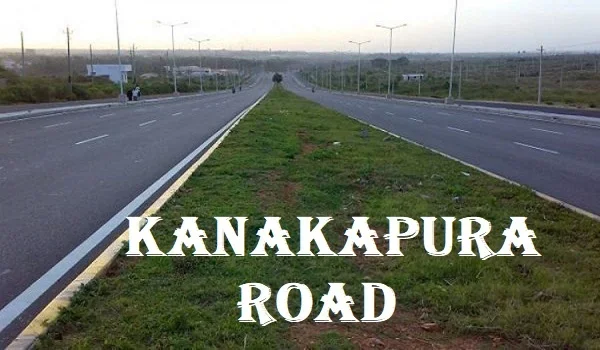
As Bangalore expanded southward through the 1960s and 70s, neighbouring areas like Banashankari, Padmanabhanagar and Konanakunte saw progressive residential development. Vajarahalli sat just beyond this expansion edge — close enough to be reachable, far enough to remain peripheral. Land transactions during this period were primarily small residential plots and farmhouses, with limited apartment-format development. Kanakapura Road remained a two-lane regional connector.
1990s–2000s — The BBMP Expansion Era
Bangalore's municipal boundaries expanded in the late 1990s. More of the southern belt came under the Bruhat Bengaluru Mahanagara Palike (BBMP) umbrella. Improved municipal water, sewerage and road infrastructure followed. Kanakapura Road was widened to handle growing south-Bangalore commuter traffic. The NICE Road project was conceived during this era. Bangalore's IT boom created spillover demand for residential land beyond the saturated Jayanagar / JP Nagar core. Vajarahalli benefited from that wave.
2010–2018 — Road Grid Maturation
The NICE Road orbital ring was completed by the early 2010s. It added a signal-free road-grid connector between south Bangalore, Mysore Road, Tumkur Road and Hosur Road. Vajarahalli is just 2.5 km from the NICE Road / Kanakapura Main Road junction. It gained material connectivity overnight. Land transactions started trending upward. Mid-segment apartment launches arrived in the Thalaghattapura–Kaggalipura belt. The commuter profile shifted too. It went from primarily local to including senior tech professionals using NICE Road for Electronic City access.
2018–2024 — The Green Line Transformation
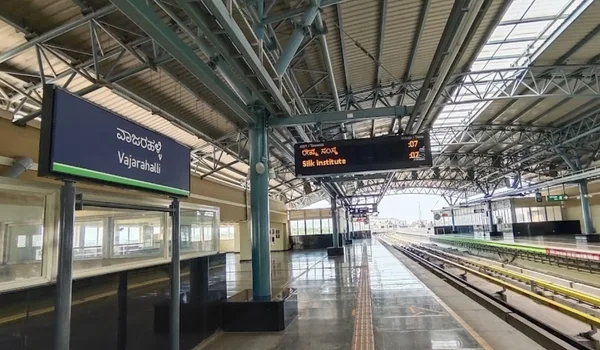
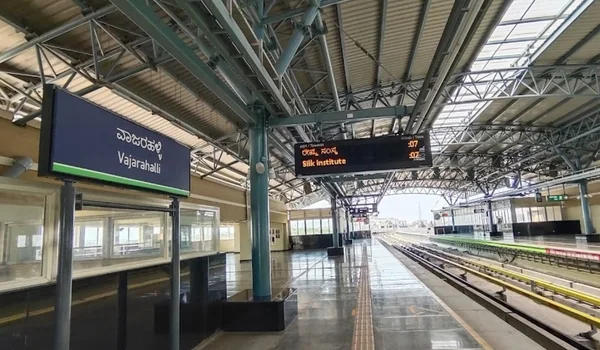
The biggest catalyst in Vajarahalli's modern growth was the southern Namma Metro Green Line extension. The Yelachenahalli–Silk Institute stretch came online through 2017. Silk Institute opened as the line's then-southern terminus. The Thalaghattapura station extension followed. That turned Vajarahalli into a walking-distance-to-metro residential pocket. No road infrastructure could match this shift. Property values along the Vajarahalli–Thalaghattapura belt started posting 10–15% year-on-year appreciation through this period.
2024–2026 — Boutique-Format Launches Arrive
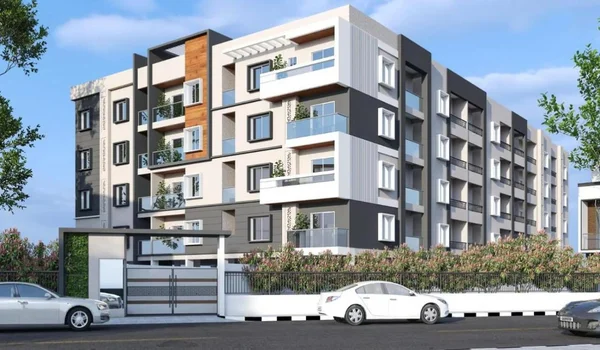
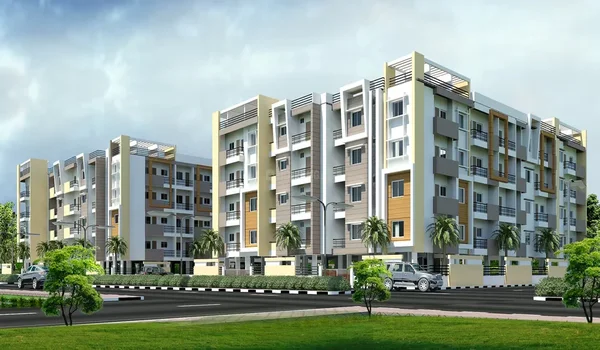
With the metro operational and road-grid connectivity matured, the catchment attracted a new wave of boutique-format luxury developers. Earlier launches had been mid-segment 2 BHK / 3 BHK projects for volume buyers. The post-metro launches shifted toward upscale 3 BHK / 3.5 BHK boutique-format projects. The target buyer is HNI and senior corporate. Purva Eminora is a representative example. Property rates moved into the ₹11,000–₹14,500 per sq.ft. band. Cumulative appreciation over the preceding 5-year window is 50–60%.
2026 Onwards — What's Driving the Next Wave
- Namma Metro Phase 3 extension: Adds further stations along Kanakapura Main Road through 2027–2030.
- Purva Zentech IT park (upcoming, 2.5 km): Creates direct walk-to-work employment in the catchment.
- Banashankari–NICE Road Elevated Expressway: Cuts central Bangalore commute times.
- Bangalore Airport Metro (Blue Line, 2027–2028): Opens direct metro access to BLR airport.
- Satellite Town Ring Road (STRR): Improves orbital access from south to east and west tech corridors.
Cultural Anchors That Remain
- Thalaghattapura Lake: A heritage waterbody at the western edge of the catchment, being restored as a public recreation space.
- Local temples: Several long-standing community temples remain active in the residential pockets between Vajarahalli and Kaggalipura.
- Turahalli Forest Reserve (6 km): A notified reserve forest popular for weekend treks and birdwatching.
- Art of Living International Centre (12 km): A globally recognised wellness destination just south of the catchment.
Vajarahalli's Place in Modern Bangalore
In just under two decades, Vajarahalli has changed completely. It moved from an agricultural pocket to one of south Bangalore's most-active boutique-residential catchments. Metro walkability, road-grid access and ongoing infrastructure investment continue to support the trajectory. The historical pattern is clear — 50–60% cumulative appreciation, with more infrastructure catalysts ahead. Projects like Purva Eminora should be evaluated as part of a longer growth arc, not a snapshot.
Frequently Asked Questions about Vajarahalli History
1. What was Vajarahalli before it became a residential catchment?
Vajarahalli was a small agricultural pocket south of the historic Bangalore city limits. It was sparsely populated. Land was used mainly for small-holding agriculture. It sat outside the city's pre-1990 residential expansion edge. It stayed quietly rural until BBMP boundary expansion and road improvements brought it into the broader Bangalore residential footprint.
2. When did property values start moving up?
Property values picked up through the early 2010s after NICE Road came online. They accelerated again with the Namma Metro Green Line extension. The Vajarahalli–Thalaghattapura belt has delivered 50–60% cumulative appreciation in the recent 5-year window. Year-on-year growth runs 10–15%.
3. What changed when the metro opened?
Three things changed at once. Commute times to central Bangalore dropped. The catchment became attractive to senior tech professionals who were previously focused on east Bangalore. Boutique-format luxury developers started entering. Vajarahalli moved from a peripheral commuter pocket to a primary residential destination in its own right.
4. Has Vajarahalli always been part of BBMP?
No. The Bruhat Bengaluru Mahanagara Palike (BBMP) administrative boundary was expanded in the late 1990s. That brought more of the southern belt under municipal jurisdiction. Before that, Vajarahalli was managed under panchayat-level local government. Urban infrastructure investment was much lower then.
5. What's coming next for Vajarahalli?
Several catalysts are lined up. Namma Metro Phase 3 expansion. The upcoming Purva Zentech IT park (2.5 km). The Banashankari–NICE Road Elevated Expressway. The Bangalore Airport Metro Line. The Satellite Town Ring Road. Together they represent the next decade of infrastructure investment. The trajectory looks set to stay positive.
6. Are there heritage landmarks left in Vajarahalli?
Yes. Thalaghattapura Lake is being restored as a public recreation space. Several community temples sit in the residential pockets. The Turahalli Forest Reserve is at the southern edge. Kanakapura Main Road itself is heritage — one of south Bangalore's historic arterial connectors.
Purva Eminora Blog