History of Kanakapura Road

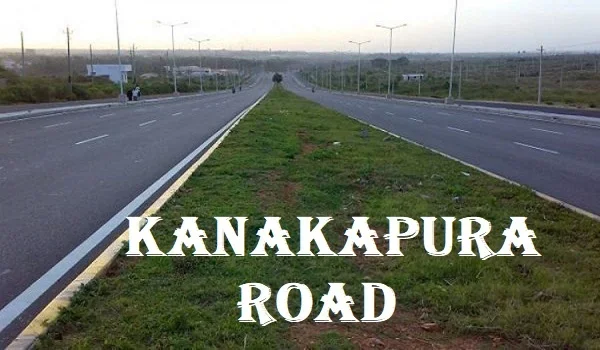
The history of Kanakapura Road goes back to a rural "cutcha" arterial known as Kankanhalli Road. Over time it became National Highway NH-209. It was later renumbered as NH-948. Then came the Namma Metro Green Line. Today it is one of south Bengaluru's most-watched residential corridors. For most of the 20th century, the road was a slow connector. Buses and bullock carts had to wade across the Arkavathi River. Three things shifted it: progressive highway upgrades, the NICE Road and Outer Ring Road intersections, and most decisively the operational Namma Metro Green Line.
Early Period — The Kankanhalli Road Era
Before the name "Kanakapura Road" was common, the road was called Kankanhalli Road. It was an unpaved "cutcha" route. It wound southward from the old Bengaluru city limits through shrub forests, agricultural pockets and small village clusters. Daily traffic was mostly bullock carts taking produce to the city. State-run buses were infrequent. Many people walked. There was no formal bridge across the Arkavathi River for much of its early life. Buses and bullock carts had to wade across the river in dry months. During monsoon, they detoured fully. Settlements along the corridor — Konanakunte, Doddakallasandra, Vajarahalli, Talaghattapura and Kaggalipura — stayed small, low-density agrarian villages.
1960s–1980s — Regional Connector to Kanakapura Town
Through the 1960s and 70s the road was widened and partially paved. That made it a formal regional connector. It linked Bengaluru to Kanakapura town and onward into rural southern Karnataka. Forest cover along the alignment thinned. Plotted residential layouts started appearing in inner stretches near Basavangudi and Banashankari. Mid-corridor villages like Vajarahalli felt this expansion only on the margins. Population densities stayed low. The road itself stayed a two-lane regional arterial.
1990s — National Highway NH-209 Designation
In the 1990s the arterial was upgraded. It was formally designated as National Highway 209 (NH-209). It connected Bengaluru southward to Dindigul in Tamil Nadu via Kanakapura town. The NH designation brought central-government investment. It brought signage standardisation. It brought progressive widening into a divided highway. Around the same time, the Bruhat Bengaluru Mahanagara Palike (BBMP) municipal boundary expanded. More of the southern belt came under city administration. That improved water, drainage and street infrastructure on the inner road stretches through Banashankari and JP Nagar.
2000s — NICE Road and the Outer Ring Road Intersections
Two projects redefined Kanakapura Road's role in the 2000s. First, the Outer Ring Road (ORR) at Banashankari created a high-volume east-west connector. It crossed the inner stretch of Kanakapura Road. That opened access to Mysore Road, Hosur Road and the Electronic City employment cluster. Second, the NICE Peripheral Ring Road became operational through the late 2000s and early 2010s. It created a signal-free orbital connector. It crossed Kanakapura Road at the Vajarahalli–Thalaghattapura belt. For mid-corridor sub-localities, the NICE Road junction was the biggest connectivity event of the decade. Land transactions started trending upward. Mid-segment apartment launches arrived in the Konanakunte–Talaghattapura belt. The commuter profile also shifted. It went from primarily local to including senior tech professionals working at Electronic City.
2010s — Highway Redesignation to NH-948
In the mid-2010s, the National Highway renumbering exercise took place. The Bengaluru–Kanakapura–Dindigul stretch was renumbered from NH-209 to NH-948. The renumbering brought a fresh round of widening. Junctions improved. Roadside infrastructure was upgraded. By this point, Kanakapura Road had changed visibly. It moved from a peripheral state arterial into a proper national highway corridor. The Outer Ring Road was now operational. NICE Road was operational. Inner-corridor metro stations on the Green Line — Banashankari and JP Nagar — had also come online. Together they gave the corridor its first three-mode connectivity stack: highway, ring road and metro.
2017–2021 — The Namma Metro Green Line Transformation
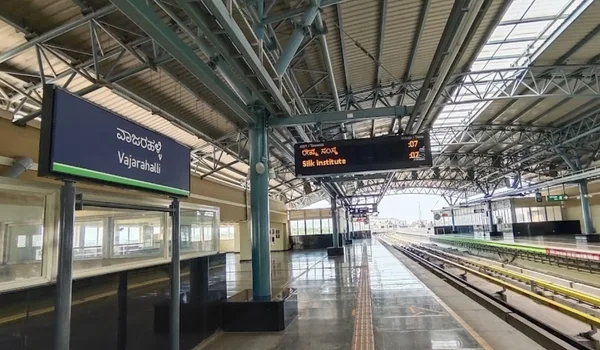
The biggest catalyst in Kanakapura Road's modern history was the southern Namma Metro Green Line extension. The Yelachenahalli–Silk Institute stretch came online through 2017. Silk Institute opened as the southern terminus. More stations followed — Konanakunte Cross, Doddakallasandra, Vajarahalli (opened 21 January 2021) and Thalaghattapura. Together they completed a five-station residential belt along the corridor's primary southern stretch. For the first time, the entire Kanakapura Road residential belt had walking-distance metro access. Onward interchanges took commuters to the Purple Line at Majestic and the Yellow Line at R.V. Road. Property values along the Konanakunte–Talaghattapura belt started posting 10–15% year-on-year appreciation. Developer interest accelerated within 12 months of each station opening.
2021–2024 — National Developers Move In
With the metro fully operational, the corridor attracted a new wave of national developers. Earlier launches had been mid-segment 2 BHK / 3 BHK projects for volume buyers. The post-metro era was different. Puravankara, Prestige, Brigade and Sobha all staked premium-format ground along the corridor. Brigade's Meadows project anchored the mid-belt premium identity. Prestige and Sobha followed with similar launches. The Vajarahalli–Talaghattapura belt started re-pricing toward boutique luxury. The corridor's identity shifted. It went from "south-Bengaluru affordable peripheral arterial" to "south-Bengaluru premium metro-anchored growth corridor".
2024–2026 — Boutique-Format Premium Launches Arrive
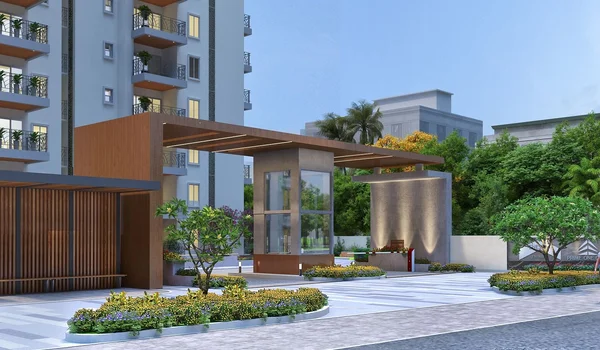
By 2024–2026 the corridor's premium identity was set. Boutique-format upscale launches arrived at Vajarahalli and Talaghattapura. Purva Eminora is a representative example. It covers 3.6 acres. Two signature towers hold ~250 residences. Configurations are 3 BHK and 3 BHK + Staff (3.5 BHK). The pre-launch base rate is ₹14,500/sq.ft. Property rates across the corridor settled into a ₹9,000–₹16,500/sq.ft. band depending on sub-locality. The Vajarahalli–Talaghattapura belt sat at the upper end. Five-year cumulative corridor appreciation reached ~50–70%. The metro-anchored belts performed strongest.
2026 Onwards — What's Driving the Next Wave
- Namma Metro Phase 3 extension: Adds further stations along Kanakapura Main Road through 2027–2030, extending the operational Green Line beyond Silk Institute.
- Purva Zentech IT park (upcoming): First major in-corridor employment cluster, creating direct walk-to-work demand at the Vajarahalli end.
- Banashankari–NICE Road Elevated Expressway: Cuts central Bangalore commute times for the inner corridor.
- Bangalore Airport Metro (Blue Line, 2027–2028): Opens direct metro access between south Bengaluru and BLR airport via interchanges.
- Satellite Town Ring Road (STRR): Improves orbital access from south Bengaluru to east and west tech corridors.
- Continued premium-format launches: National developers continuing to deploy along the corridor, particularly in Vajarahalli, Talaghattapura and Kaggalipura.
Cultural and Natural Anchors That Remain
- Turahalli Forest: Bengaluru's last surviving urban forest, a notified reserve on the corridor's western edge — popular for weekend treks and birdwatching.
- Arkavathi River crossing: The river that buses and bullock carts once waded across is now formally bridged, but remains a geographic marker of the corridor's earlier era.
- Art of Living International Centre: The global headquarters of Sri Sri Ravi Shankar's Art of Living movement, off Kanakapura Road — a destination for international visitors year-round.
- Pyramid Valley International: A spiritual retreat and meditation centre that has been a long-standing landmark along the corridor.
- ISKCON Vaikuntha Hill: A newer ISKCON temple complex that has become a cultural anchor of the modern Kanakapura Road identity.
- Thalaghattapura Lake: A heritage waterbody at the eastern edge of the catchment, being restored as a public recreation space.
Kanakapura Road's Place in Modern Bengaluru
In just over three decades, Kanakapura Road has changed completely. It moved from a shrub-lined "cutcha" Kankanhalli Road. It is now a 52–55 km National Highway NH-948 corridor. The Namma Metro Green Line is fully operational. Premium developers have a strong presence. The mix of nature, spiritual and education anchors is rare for a Bengaluru arterial. For buyers and investors today, the pattern is clear. Each wave of infrastructure has built on the previous one. Projects like Purva Eminora at Vajarahalli should be seen as part of a longer growth arc, not a snapshot.
Frequently Asked Questions about the History of Kanakapura Road
1. What was Kanakapura Road called before?
Kanakapura Road was historically called Kankanhalli Road. It was an unpaved "cutcha" route through shrub forests. Buses and bullock carts had to wade across the Arkavathi River. Over the decades the route was widened. It was designated as National Highway NH-209. It was later renumbered as NH-948.
2. When did Kanakapura Road become a National Highway?
The arterial was formally upgraded in the 1990s. It was designated as National Highway 209 (NH-209). It connected Bengaluru southward to Kanakapura town and onward to Dindigul in Tamil Nadu. The National Highway renumbering exercise took place in the mid-2010s. The alignment was renamed NH-948. That is the number it carries in 2026.
3. When did property values along Kanakapura Road start moving up?
Property values picked up through the late 2000s and early 2010s. The Outer Ring Road and NICE Road junctions came online during this time. Growth accelerated sharply after that. The Namma Metro Green Line southern extension reached Konanakunte Cross, Doddakallasandra, Vajarahalli and Thalaghattapura in the 2017–2021 window. Cumulative corridor appreciation in the recent 5-year window has been ~50–70%. The metro-anchored sub-localities have performed strongest.
4. What changed when the Namma Metro Green Line opened along Kanakapura Road?
Three things changed at the same time. First, commute times to central Bengaluru dropped sharply. That came via interchanges to the Purple Line at Majestic and the Yellow Line at R.V. Road. Second, the corridor became attractive to senior tech professionals. Many of them had earlier focused on east Bengaluru. Third, national premium developers entered. Puravankara, Prestige, Brigade and Sobha all set up here. Kanakapura Road moved from being a peripheral commuter arterial. It became one of south Bengaluru's primary residential growth corridors.
5. Has Kanakapura Road always been part of BBMP?
No. The inner stretches through Basavangudi and Banashankari have been under BBMP and its predecessors for decades. The mid-corridor sub-localities — Konanakunte, Doddakallasandra, Vajarahalli, Talaghattapura — came under the Bruhat Bengaluru Mahanagara Palike umbrella only later. The shift happened during the late-1990s BBMP boundary expansion. Before that, these stretches were under panchayat administration. Urban-infrastructure investment was much lower.
6. What's coming next for Kanakapura Road?
Five projects represent the next decade. The Namma Metro Phase 3 extension along Kanakapura Main Road runs through 2027–2030. The upcoming Purva Zentech IT park is in the pipeline. The Banashankari–NICE Road Elevated Expressway is also planned. The Bangalore Airport Metro (Blue Line) is targeted for 2027–2028. The Satellite Town Ring Road (STRR) rounds it out. Together they are likely to keep the corridor's growth positive.
Purva Eminora Blog